
These Stones Remain
Sacred Masterworks of Tudor England
The Tudor Choir
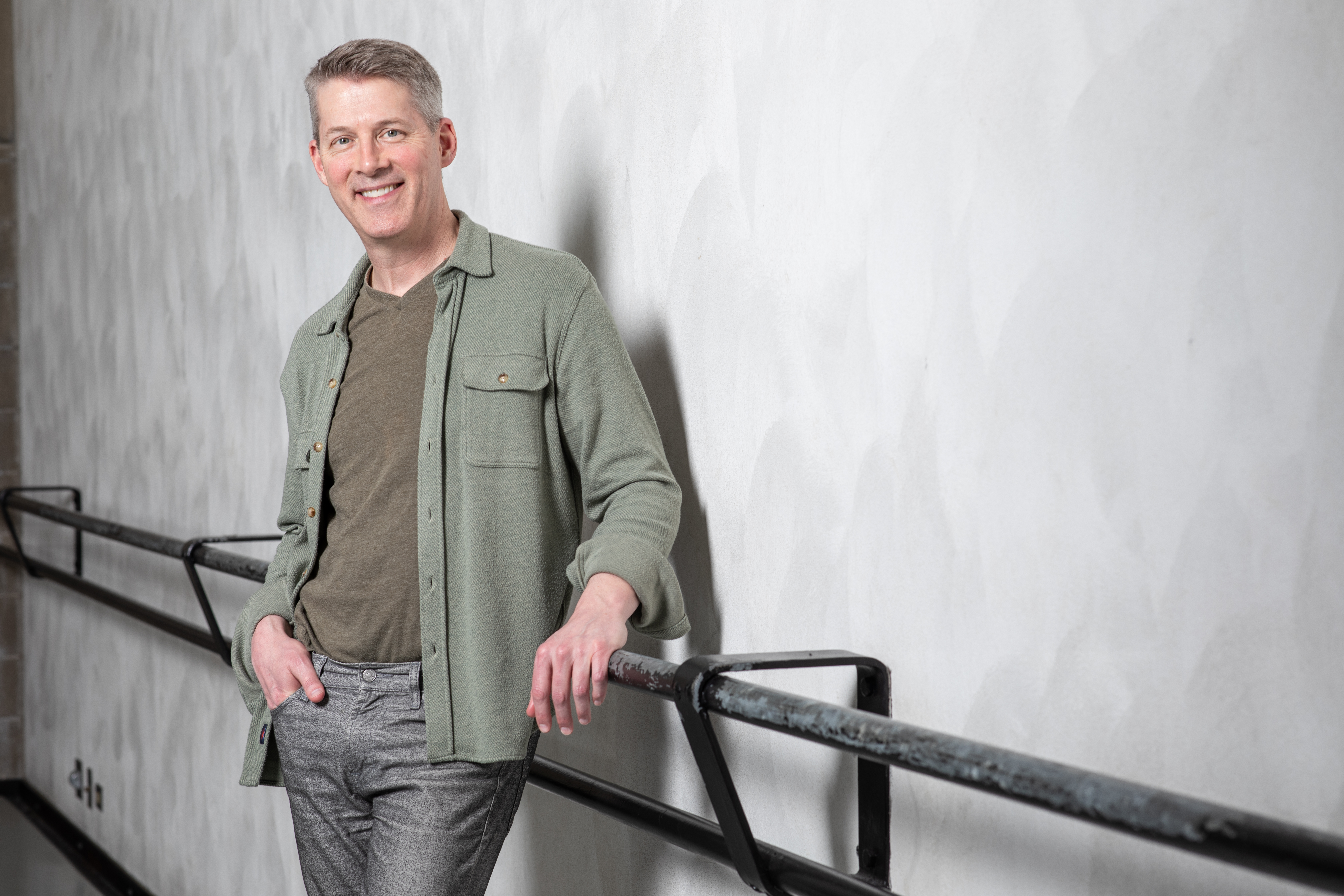
Doug Fullington, Founder & Director
Tudor England (c1485–1603) was deeply unstable—yet monuments of its Latin sacred music survived, including the Sarum rite chant used before the Reformation. This chant formed the basis of devotional works by Taverner, Sheppard, Fayrfax, and Tye. It appears directly in several pieces on this program—among them Sheppard’s deeply moving Libera nos, whose chant melody is shown at the bottom of this page. This music is inseparable too from the stone abbeys and cathedrals it was made to fill. These Stones Remain restores these masterworks to their spiritual home, performed by the Northwest’s own Tudor Choir.
Dum transisset sabbatum
John Taverner (c. 1490–1545)
Haec dies
William Byrd (1539/40–1623)
Ave Maria
Robert Parsons (c. 1535–1572)
O nata lux
Thomas Tallis (c. 1505–1585)
O ye tender babes of England
Thomas Tallis
Magnificat “Regale ex progenie”
Robert Fayrfax (1464–1521)
Intermission
Libera nos, salva nos I & II
John Sheppard (c. 1515–1558)
Lamentations a5
Robert White (c. 1530–1574)
In pace in idipsum
Christopher Tye (c. 1505–1573)
O splendor gloriae
John Taverner & Christopher Tye
The music on our program spans four generations and represents eight of the primary composers working in 16th-century England. Apart from one short song, this program features sacred music originally sung in buildings still standing today—these stones remain, as the program’s title reminds us.
The concept of Chant Encounters, the theme of Cappella Romana’s current season, influenced our musical choices for this program of Tudor music. Liturgical chant formed the building blocks for most polyphonic (that is, multi-voice) works composed for skilled choirs in England’s cathedrals and academic institutions. The Sarum rite—a medieval variant of the Roman Catholic liturgy developed at Salisbury Cathedral—was in use for much of the century and continued to influence composers even after it was finally abolished by Elizabeth I via the 1558 Act of Uniformity. Many works were composed in alternatim format, in which sections of polyphony, sung by soloists or full choir, alternate with chant. On our program, Taverner’s Dum transisset sabbatum, Fayrfax’s Magnificat, and Tye’s In pace in idipsum are alternatim works. Other works incorporate chant as part of the polyphonic texture—the chant notes are sung slowly in one voice, providing a harmonic framework for newly composed lines in the other voices. Dum transisset sabbatum features the chant melody in the baritone part, and both of Sheppard’s settings of Libera nos, salva nos feature chant in the bass part. Paraphrasing chant—or, essentially, riffing on a chant melody—was another technique composers used to create original work. Parsons’s Ave Maria, for example, begins with the first three notes of the chant associated with the Ave Maria text when it was sung as a pre-service devotion in the Sarum rite.
We will sing the works as one might have heard them throughout the course of a day—music sung during morning and daytime hours fills the first half and music appropriate for the evening is in the second. (Here I was guided in part by the intriguing Tudor proverb, “Sing before breakfast, cry before supper.”)
John Taverner’s Dum transisset sabbatum, a setting of the third responsory at Matins on Easter Day, opens with expansive choral writing that suggests the sun rising on that most momentous of spiritual occasions. The work has the distinction of being the first “choral” responsory, in which the chant sung by the choir is decorated with newly composed polyphony that alternates with chant verses sung by soloists.
William Byrd’s six-voice setting of Haec dies, also an Easter text (“This is the day the Lord has made”), was likely intended for performance by solo voices, possibly in a domestic setting. With its tight syncopation and rhythmic interplay between voices, Haec dies reflects the growing popularity of the madrigal in the late-16th century, but Byrd also achieves a sustained sense of triumphant expansiveness once the concluding alleluias have begun.
The text of the Marian prayer Ave Maria is the Sarum Rite’s Offertory for the Feast of the Annunciation. Depending on when during the tumultuous 16th century and for what purpose it was composed, Robert Parsons’s five-voice setting may have been sung as part of a liturgy or for private devotions. The initial six phrases in the top voice, each one higher than the previous, create an expectant feeling of building and rising that is beautifully balanced by the soaring final Amen.
Employed in the royal household from the 1540s, Thomas Tallis was the only English composer who worked throughout all the religious reforms from Henry VIII to Elizabeth I. O nata lux, a five-voice setting of the first verse of the hymn at Lauds for the Feast of the Transfiguration, was published in 1575 and likely intended for private devotional use. Its rich harmony and combination of chordal and contrapuntal textures are characteristic of Tallis’s later work.
His much earlier O ye tender babes of England may be a setting of a moralizing verse by the Tudor grammarian William Lily—preserved in a collection of keyboard pieces known as the Mulliner Book, the music’s only text is its title. Possibly read to or recited by school-age children, the verse perfectly captures the socio-religious expectations of the Tudor era. We pair this with Robert Fayrfax’s monumental setting of the Magnificat preserved in the early-16th-century Lambeth Choirbook. The rigor of Fayrfax’s vocal writing, exemplified by extended passages of melismatic polyphony employing multiple combinations of voices, can be viewed as the musical equivalent of Lily’s aspirational text, requiring a high level of discipline and achievement of its singers.
John Sheppard was master of choristers at Magdalen College, Oxford, in the 1540s. The college statutes required residents to recite the Latin prayer Libera nos upon rising in the morning and going to sleep at night (not unlike the possible function of Lily’s O ye tender babes). Sheppard made two settings of Libera nos for the choir at Magdalen. They are among the most magical pieces of polyphony composed during the Tudor era, each with the chant melody moving slowly in the bass over which is spun a web of intricate polyphony for six higher voices.
Robert White’s setting of Lamentations for five voices is considered a masterpiece of balanced structure and expressive lyricism. We’re performing the first half of the setting, which includes three verses—each led by the Hebrew letter that forms part of an alphabetic acrostic—and the refrain, “Jerusalem, Jerusalem, return to the Lord your God.”
White worked at Ely Cathedral, taking over from his father-in-law, Christopher Tye, and later at Westminster Abbey. Tye’s four-voice setting of the Lenten responsory at Compline, In pace in idipsum, was likely sung at Ely. It contrasts with Taverner’s responsory Dum transisset by providing new music for the passages of chant sung by soloists, making it a “solo” responsory.
Like Fayrfax’s Magnificat, the extended “Jesus antiphon” O splendor gloriae alternates passages for full choir with passages for any number of voice combinations. Ingenuity and creativity abound throughout this lyrical and athletic choral tour de force. Recent scholarship suggests that the first half of the work was composed by Taverner and the second half by Tye. Whether Taverner left the piece unfinished, later to be completed by Tye, or the two collaborated, remains an open question.
I would like to express our thanks to Cappella Romana, and especially to Mark Powell and John Michael Boyer, for including the Tudor Choir on its wonderful season and giving us an opportunity to perform again in Seattle and Portland.
—Doug Fullington
Founded by Doug Fullington in 1993, the Tudor Choir is a Seattle-based vocal chamber ensemble hailed as “a superb choir” (Gramophone) and “a choir to watch” (Fanfare). The choir has been a resident ensemble at Blessed Sacrament Church in Seattle’s University District; Artists-in-Residence at St. Mark’s Cathedral, Seattle; a Resident Ensemble at St. Thomas Episcopal Church, Medina; a Guest Choral Artist at St. James Cathedral, Seattle; and currently performs periodically. The Tudor Choir has been acclaimed for its performances of Renaissance polyphony and early American music. The choir has performed extensively throughout the Pacific Northwest as well as on the East Coast and has made guest appearances with the Mark Morris Dance Group, Pacific Northwest Ballet, Seattle Baroque Orchestra, Seattle Symphony, and Early Music Seattle. The Tudor Choir has made a number of recordings for the Loft, Gothic, and Scribe labels. Visit tudorchoir.com for the latest news.
The Tudor Choir’s next performance will be a program of Tudor music for Lent on Sunday, March 14 at 3:00pm at St. Mark’s Cathedral, Seattle, presented by Saint Mark’s Music Series.
Doug Fullington is a musicologist and dance historian. He founded the Tudor Choir in 1993 and has sung with the Compline Choir of St. Mark’s Cathedral, the Tallis Scholars, and Byrd Ensemble, and sang with Cappella Romana on its first European tour in 2004. Recent music projects include conducting the Tudor Choir and Pacific Northwest Ballet Orchestra in performances of choreographer Rena Butler’s ballet Cracks and the publication by Bärenreiter-Verlag of a critical edition of the score of Adolphe Adam’s ballet Giselle (1841), which Doug co-edited with Marian Smith. Doug’s work in dance primarily focuses on 19th-century French and Russian ballet. Pointe Magazine recently noted, “Seattle native Doug Fullington has built an international reputation for resurrecting and restaging classical ballets from the 19th century.” With Marian Smith, Doug is co-author of Five Ballets from Paris and St. Petersburg (Oxford, 2024). Recent dance projects include staging The Sleeping Beauty with Peter Boal for Pacific Northwest Ballet, a production featuring costumes by Paul Tazewell (Hamilton, Wicked), and Star on the Rise, a reimagination of the 19th-century ballet classic La Bayadère, with Phil Chan at Indiana University. Visit dougfullington.com for more information.
Dum transisset sabbatum
Third responsory at Matins, Easter Day
Music: John Taverner (c. 1490–1545)
Dum transisset Sabbatum Maria Magdalene et Maria Iacobi et Salome emerunt aromata, ut venientes ungerent Iesum. Alleluia.
Et valde mane una sabbatorum venient ad monumentum orto jam sole, ut venientes ungerent Iesum. Alleluia.
Gloria Patri et Filio et Spiritui Sancto. Alleluia.
When the Sabbath was past, Mary Magdalene and Mary the mother of James and Salome had brought sweet spices that they might come and anoint Jesus. Alleluia.
And very early in the morning the first day of the week they came to the sepulcher at the rising of the sun, that they might come and anoint Jesus. Alleluia.
Glory to the Father and the Son and Holy Spirit. Alleluia.
Haec dies
Words: Psalm 118:24
Music: William Byrd (c. 1540–1623), published in Liber Secundus Sacrarum Cantionum, 1591
Haec dies quam fecit Dominus. Exultemus et laetemur in ea. Alleluia.
This is the day the Lord has made. We will rejoice and be glad in it. Alleluia.
Ave Maria
Words: from Luke 1:30 & 42
Music: Robert Parsons (c. 1535–1572)
Ave Maria, gratia plena, Dominus tecum: benedicta tu in mulieribus, et benedictus fructus ventris tui. Amen.
Hail Mary, full of grace, the Lord is with you: blessed are you among women, and blessed is the fruit of your womb. Amen.
O nata lux
Hymn at Lauds, Transfiguration
Music: Thomas Tallis (c. 1505–1585), published in Cantiones quae ab argumento sacrae vocantur, 1575
O nata lux de lumine,
Jesu redemptor saeculi,
Dignare clemens supplicum
Laudes preces que sumere.
Qui carne quondam contegi
Dignatus es pro perditis.
Nos membra confer effici,
Tui beati corpori.
O born light of light,
Jesus redeemer of the world,
mercifully deem worthy
and accept the praises of your supplicants.
You who once deigned to be clothed in flesh
for the sake of the lost ones,
grant us to be made members
of your blessed body.
O ye tender babes of England
Words: from William Lily’s An Introduction of the Eyght Partes of Speche, 1542
Music: Thomas Tallis
O ye tender babes of England, shake off slothfulness, set wantonness apart. Apply your wits wholly to learning and virtue, whereby you may do your duty to God and your King. Make glad your parents, profit yourselves; and much advance the commonweal of your country.
Magnificat “Regale ex progenie”
Canticle at Vespers, Luke 1:46–55
Music: Robert Fayrfax (1464–1521)
Magnificat anima mea Dominum: et exsultavit spiritus meus in Deo salutari meo.
Quia respexit humilitatem ancille sue: ecce enim ex hoc beatam me dicent omnes generationes.
Quia fecit mihi magna qui potens est: et sanctum nomen eius.
Et misericordia eius a progenie in progenies: timentibus eum.
Fecit potentiam in brachio suo: dispersit superbos mente cordis sui.
Deposuit potentes de sede: et exaltavit humiles.
Esurientes implevit bonis: et divites dimisit inanes.
Suscepit Israel puerum suum: recordatus misericordiae sue.
Sicut locutus est ad patres nostros: Abraham et semini eius in secula.
Gloria patri et filio et spiritui sancto: sicut erat in principio et nunc et semper et in secula seculorum. Amen.
My soul magnifies the Lord: and my spirit has rejoiced in God my savior.
For he has looked upon the lowliness of his handmaiden: for behold from this time all generations shall call me blessed.
For he who is mighty has magnified me: and holy is his name.
And his mercy is on those who fear him: in every generation.
He has shown strength with his arm: he has scattered the proud in the imagination of their hearts.
He has deposed the mighty from their seat: and has exalted the humble.
He has filled the hungry with good things: and the rich he has sent empty away.
Mindful of his mercy: he has helped his servant Israel.
As he promised to our forefathers: Abraham and his seed forever.
Glory to the Father and the Son and the Holy Spirit: as it was in the beginning, is now, and ever shall be, world without end. Amen.
Intermission
Libera nos, salva nos I & II
Sixth psalm antiphon at Matins, Trinity Sunday
Music: John Sheppard (c. 1515–1558)
Libera nos, salva nos, iustifica nos, O beata Trinitas.
Free us, save us, justify us, O blessed Trinity.
Lamentations a5
Words: Lamentations 1:8–10
Music: Robert White (c. 1538–1574)
Heth. Peccatum peccavit Ierusalem, propterea abominabilis facta est;
omnes, qui glorificabant eam, spreverunt illam, quia viderunt ignominiam eius:
ipsa autem gemens conversa est retrorsum.
Teth. Sordes eius in fimbriis eius, nec recordata est finis sui;
deposita est vehementer, non habens consolatorem.
“Vide, Domine, afflictionem meam, quoniam erectus est inimicus!”.
Iod. Manum suam misit hostis ad omnia desiderabilia eius,
quia vidit gentes ingressas sanctuarium suum,
de quibus praeceperas, ne intrarent in ecclesiam tuam.
Jerusalem, Jerusalem, convertere ad Dominum Deum tuum.
Heth. Jerusalem has grievously sinned; therefore she is removed: all that honored her despise her, because they have seen her nakedness: yet, she sighs and turns backward.
Teth. Her filthiness is in her skirts; she does not remember her last end; therefore she has been wonderfully abased: she has no comforter. O Lord, see my affliction: for the enemy has magnified himself.
Iod. The adversary has spread out his hand on all her pleasant things: for she has seen that the heathen entered into her sanctuary, whom you commanded that they should not enter into your congregation.
Jerusalem, Jerusalem, return to the Lord your God.
In pace in idipsum
Responsory at Compline, Lent
Music: Christopher Tye (c. 1505–1573)
In pace in idipsum dormiam et requiescam.
Si dedero somnum oculis meis et palpebris meis dormitationem, dormiam et requiescam.
Gloria Patri et Filio et Spiritui Sancto.
In pace in idipsum dormiam et requiescam.
In peace, in very peace I will sleep and take my rest.
If I will have given sleep to my eyes and slumber to my eyelids, sleep and take my rest.
Glory to the Father and the Son and the Holy Spirit.
In peace, in very peace I will sleep and take my rest.
O splendor gloriae
Jesus antiphon, early 16th century
Music: John Taverner & Christopher Tye
O splendor gloriae et imago substantiae Dei Patris omnipotentis, Jesu Christe, unice ejusdem fili
ejusdem fili dilecte, totius boni fons vive, redemptor redemptor mundi, servator, et Deus noster, salve!
Gloriosa, Domine, tua est majestas, et opera mirabilia: tu coelum et terram cum omnibus quae in eis sunt creaturis divino tuo verbo ex nihilo fecisti; quae sapientissime mox disponens, nobis quos ad imaginem tuam novissime formasti, ut deservirent, benignissime cuncta subdidisti.
Mortem intulerat protoplasti in obedientia; sed quo facturae tuae vitam redimeres, de Maria virgine humilima, Jesu, sumpsisti carnem: ex qua enim, de spiritu sancto conceptus, natus es Deus et homo, ac illa tua mater integra permansit et perpetua virgo.
Et cum pro nobis duram tolerasses vitam, flagris caesus et tormentis laceratus, qui peccatum non feceris, in corpore tuo scelera nostra perferens, ac eadem tuo pretiosissimo sanguine effuso abluens, mortem denique infamem, agnus mitissimus, passus es et crudelissimam: hinc, tuo Patris suavis hostia oblatus, pro nobis miseris peccatoribus es afflictus.
Dein, tertia die a morte exsuscitatus, ad coelestem Patrem cum gloria summa es elevatus, ut illi dexter assideas; inde Sanctum Paracletum nobis dedisti, qui ut nostra coelesti doctrina confirmet pectora, te prece precamur humili. Amen.
O radiance of the Father’s glory and very image of God the Father almighty, Jesus Christ, his beloved and only Son, living fount of all good, redeemer of the world, our Savior and our God, hail!
Glorious, Lord, is your majesty, and your works are wonderful: you made the heaven and the earth and all the creatures in them out of nothing by your divine word; and when in your great wisdom you had set all in its place, to us, your last creation made in your own image, you most graciously put all things in subjection, that they might serve us.
Disobedience had brought death to your first creation; but, that you might win back life for your creatures, from the most lowly virgin Mary, Jesus, you took human flesh: for, conceived by the Holy Spirit you were born of her both God and man, and she, your mother, remained inviolate and ever a virgin.
And when for our sake you had borne a life of harshness, the strokes of the lash and the searing tortures, though you had done no wrong, that in your own body you might take on yourself our misdeed, and wash away their stain by the spilling of your most precious blood, at last you suffered a death of disgrace and utmost cruelty, you, the tender lamb: and so you offered yourself as the acceptable sacrifice to your Father, and suffered for us wretched sinners.
Then being raised from the dead on the third day you were carried up to your heavenly Father with great glory, that you might take your seat at his right hand; and after you gave to us the Holy Spirit, the Comforter; and that he may strengthen our hearts by his heavenly wisdom we now pray you with humble petition. Amen.

You must be logged in to post a comment.